Double Materiality Assessment
In 2025, we updated our 2024 Double Materiality Assessment (DMA) in line with the European Sustainability Reporting Standards (ESRS). The update refined the alignment of ESG topics with developments in our business model, including our transition to a publicly listed company, and strengthened regulatory compliance.
Methodology and Integration of Stakeholders
Our DMA combines stakeholder interviews, financial analysis, and expert reviews to identify material impacts, risks, and opportunities across ESG topics and the value chain.
This methodological foundation remained unchanged in 2025, while updates to the ESRS were incorporated. The 2024 impacts, risks, and opportunities were refined and validated through updated stakeholder interviews and expert assessments. An even stronger emphasis was placed on the comprehensive consideration of the value chain, supported by the increased integration of current scientific publications and industry reports.
Key stakeholder groups — customers, employees, investors, local communities, and suppliers — remain unchanged. Following PFISTERER’s initial public offering in 2025, the relevance of capital market stakeholders further increased. Qualitative stakeholder interviews were therefore again conducted via internal functional experts acting as representative proxies for these groups.
The DMA will continue to be reviewed and updated on an annual basis to ensure alignment with evolving ESRS requirements, stakeholder expectations, and business developments.
Outcomes and Strategic Alignment
The core priorities identified in the 2024 DMA: energy transition, resource efficiency, employee satisfaction, customer orientation, and governance remain central to PFISTERER’s sustainability strategy and continue to align with the company’s core values of innovation, accountability, customer focus, and sustainability.
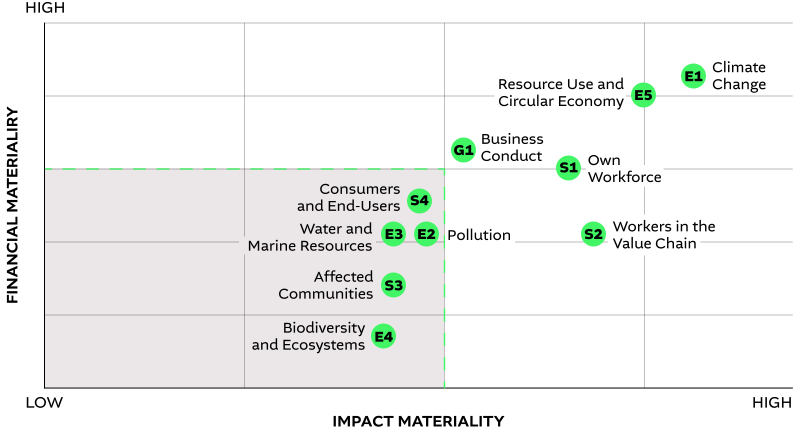
Through the outlined methodological refinement and stronger alignment with the ESRS, the topic of workers in the value chain has been added. This includes both upstream aspects, such as labour standards and conditions in the supply chain, and downstream aspects, encompassing employee safety during installation, operational activities and product safety and reliability.
Our Material Topics
E1 – Climate Change:
Enabling the electrification and decarbonisation of our society.E5 – Resource Use and Circular Economy:
Minimising waste and optimising material use.S1- Own Workforce:
Promoting well-being, equality, and stable employment.S2 – Workers in the Value Chain:
Addressing labour standards and conditions upstream in the supply chain, alongside downstream aspects of worker safety.G1- Business Conduct:
Strengthening trust through transparent practices.
Conclusion
The 2025 DMA confirms that PFISTERER’s existing core priorities remain unchanged. The assessment and its material topics continue to guide our sustainability strategy, with further refinements supporting the advancement of sustainable practices and long-term value creation. In the double materiality matrix, the ESRS sub-topics are presented based on their impact and financial materiality.